How the Right Shoes Improve Performance + Reduce Injury
Wearing the right shoes for your sport can have a big impact on both performance and injury prevention. Most importantly, always make sure you are wearing the correct size shoe. If you play a sport 2–3 times per week or more, investing in a sport-specific shoe is highly recommended.
Basketball, Tennis, + Volleyball
For sports like basketball, tennis, and volleyball, your shoes should provide:
High ankle support to stabilize the ankle during quick cuts and jumps
Thick, stiff soles for cushioning when running and landing
These features help reduce the risk of ankle injuries and improve your overall performance on the court.
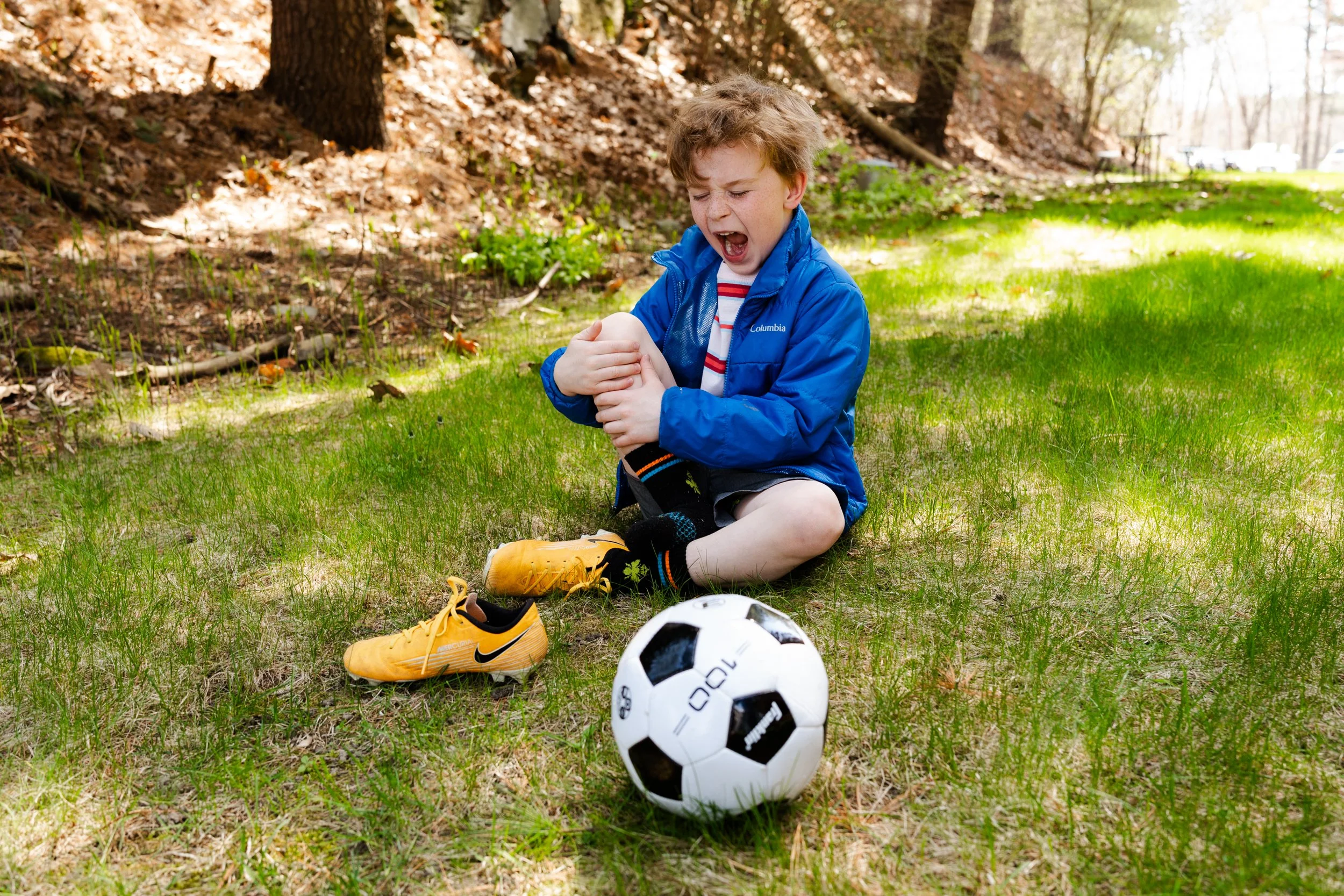
Soccer
The ideal soccer cleat should have:
Molded rubber studs instead of screw-on cleats
Proper stud placement for the surface you play on most often
No more than a half-inch of space between the big toe and the front of the shoe
Proper fit ensures traction and prevents slipping, blisters, and toe injuries.
Football + Lacrosse
For football and lacrosse, shoes should provide:
High ankle support, especially for linemen or players who make frequent lateral movements
Proper traction for grass surfaces, both wet and dry
Never use hand-me-down cleats. Ill-fitting shoes increase the risk of ankle injuries and affect performance.
Running
Running shoes should:
Provide maximum shock absorption
Match your arch type (high, medium, or low arch)
Offer proper support for your gait
Replacement guidance: Running shoes should be replaced approximately every 600 miles or every 6-8 months, whichever comes first.
Wearing sport-specific shoes that fit properly can protect your feet, ankles, and knees, improve performance, and reduce the risk of injury across all activities.
Strength Training
From a podiatrist’s perspective, the best strength training shoe is one that keeps your foot stable under load. Look for a flat, firm sole, a wide base, and a secure fit, since overly soft running shoes can make lifts feel less balanced and less efficient.
Strength Training Shoes for Wide Feet
Fitting strength training shoes for wide feet requires prioritizing a spacious toe box and secure midfoot/heel lockdown to maintain stability during lifts without side pressure or slippage. Avoid simply sizing up in standard shoes, as this adds length but not width, leading to heel lift and poor control on squats or deadlifts.
Prioritize toe box volume: Seek anatomical or wide-forefoot designs; test by fanning toes, your toes should move freely.
Heel and midfoot fit: Snug (not tight) heel counter prevents slippage; flexible uppers with adjustable laces accommodate swelling during workouts.
Try under load: Squat/lunge in-store; no pinching laterally or forward slide. Wide feet often need 1/2 size up in lifting shoes only if width lacks
If your arches are collapsing, you're limiting your potential and risking plantar fasciitis. Try the "toe yoga" warm-up: lift just your big toe while keeping others down (then reverse), sounds silly, but it fires up foot stabilizers so you don't wobble on deadlifts.
Bonus Hacks Dr. Cate Loves
Towel scrunch: Crumple a towel with your toes during rest periods to build arch strength
Barefoot on sand: Post-workout beach walks (watch for glass!) massage calves and grip toes better than any foam roller.
Heel-toe monster walk: Band around ankles for lateral steps, your peroneals will thank you!