Thick Toenails
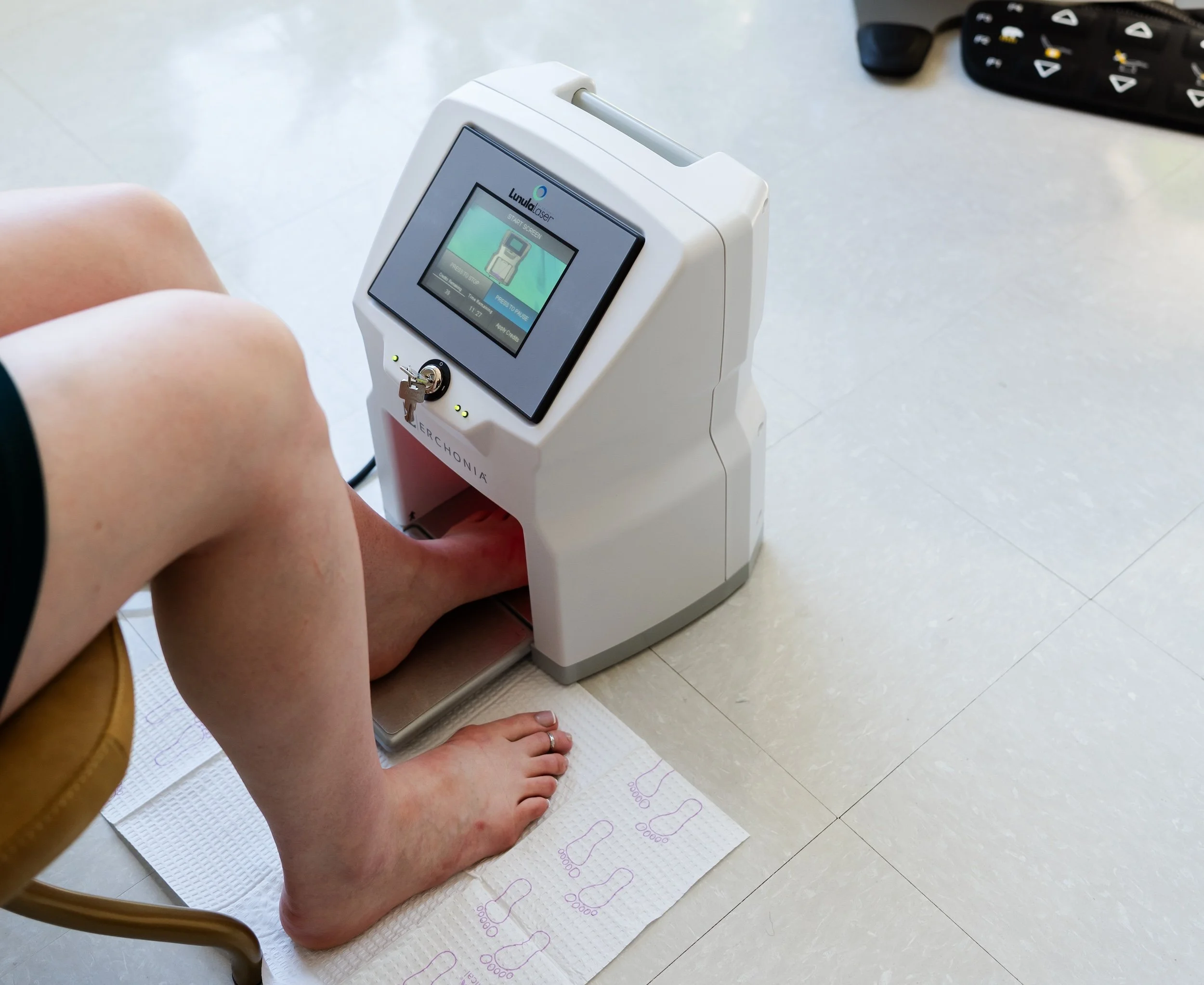
Thick toenails are a very common condition. While many people assume it’s always caused by fungus, there are actually several possible reasons for nail thickening.
CAUSES
Common Causes of Thick Toenails
The two most common causes of toenail thickening are:
Repetitive microtrauma
Fungal infection
Understanding the cause is important because treatment is different for each condition.
Repetitive Microtrauma
One of the most common causes of thick toenails is repeated pressure or trauma to the nail.
This can happen when:
Shoes are too tight or too small
The toe repeatedly hits the end of the shoe
Someone runs or hikes long distances
There is chronic pressure during athletic activity
Over time, the nail plate responds by becoming thicker, similar to how the skin forms a callus when exposed to repeated pressure. This type of nail thickening is not caused by infection.
Toenail Fungus
Another common cause of nail thickening is a fungal infection.
Onychomycosis occurs when a dermatophyte fungus invades the nail and begins feeding on keratin within the nail plate.
As the infection progresses:
The nail becomes thicker
The nail may turn yellow, white, or brown
The nail may crumble or lift from the nail bed
Multiple nails can become involved
Because toenails grow slowly, fungal infections often develop gradually over time.
DIAGNOSIS
Diagnosing the Cause of Thick Toenails
As we stated above, not all thick nails are fungal. For that reason, proper diagnosis is important before starting treatment.
At our office, we typically take a small sample of the nail and send it to a laboratory for analysis. This confirms whether fungus is present and helps guide treatment.
Accurate diagnosis prevents unnecessary treatment and ensures the right approach.

TREATMENT
Thick Toenails
Treatment for Nail Fungus
If fungus is confirmed, there are several treatment options available:
Topical antifungal medications
Oral antifungal medications
Nail removal in rare or severe cases
Because nails grow slowly, treatment requires patience. However, when properly diagnosed and treated, nail fungus can often be successfully managed.
In our practice, we have had excellent success treating fungal nail infections with the appropriate combination of therapies.
Toenail fungus is a little like water damage in wood. Even after the source of the problem is gone, the material can stay thickened, discolored, and damaged for a long time. The nail has already been altered, so maintenance is often needed even when the active fungus improves.
Treatment for Non-Fungal Thick Toenails
If thick toenails have been evaluated and it’s been determined that it is not fungal, treatment depends on the underlying cause. Common non-fungal causes include trauma, pressure from shoes, aging, psoriasis, eczema, circulation issues, or simply chronic nail dystrophy.
Common treatments include:
Urea cream (typically 40%) to soften and thin the nail over time
Better shoe gear with wider toe box to reduce repeated trauma
Filing the nail routinely at home after showering
Biotin supplementation in some cases if nails are brittle
Treatment of underlying skin conditions like psoriasis, if present
Permanent nail removal (matrixectomy) in severe painful cases
“
Dr Stark thoroughly evaluated my condition, explained my options, and answered my questions. It was a pleasure to be treated by her.
— SUE
Scientific Research
Onychomycosis: An Updated Review
This review explains that onychomycosis (nail fungus) is a very common nail condition—accounting for about half of all nail disorders—and is most often caused by dermatophyte fungi that invade and break down the nail. It highlights that the nail is particularly vulnerable because it has limited immune defense and allows fungi to persist deep within its structure, making infections difficult to treat and prone to recurrence. While oral antifungal medications are generally the most effective treatment, they can have side effects, and topical treatments are safer but less effective due to poor penetration into the nail.
A Retrospective Study of Non-thermal Laser Therapy for the Treatment of Toenail Onychomycosis
This study evaluated a non-thermal dual-wavelength laser (similar to the Lunula system) for treating nail fungus and found that about 67% of treated nails achieved meaningful clear nail growth after six months. Most nails showed visible improvement, and no adverse effects were reported, suggesting the treatment is safe and may improve nail appearance. However, the study was retrospective, non-randomized, and industry-sponsored, meaning stronger controlled trials are needed to confirm how effective it truly is.
Pulse versus continuous terbinafine for onychomycosis: a randomized, double-blind, controlled trial
This randomized, double-blind trial compared continuous terbinafine (250 mg daily) with pulse dosing (500 mg daily for one week each month) for treating onychomycosis and found that continuous therapy was significantly more effective. Patients on continuous dosing had higher rates of both mycologic cure and complete cure than those on pulse therapy. The results suggest that while pulse dosing can work, continuous terbinafine remains the more reliable and effective standard treatment.
In the News