Morton’s Neuroma
A Common Cause of Forefoot Pain

Pain in the front of the foot, especially between the toes, is often caused by a nerve condition called a neuroma.
Morton’s neuroma is irritation and thickening of a nerve in the forefoot, most commonly between the third and fourth toes. It is not a true tumor. It is an inflamed, swollen nerve caused by mechanical pressure.
CAUSES
How Does a Neuroma Develop?
The nerve becomes compressed between the metatarsal bones.
Over time:
The nerve becomes swollen
Inflammation develops
Scar tissue forms
The nerve thickens
Foot structure plays a major role. Certain foot types place increased pressure on the forefoot, which leads to chronic nerve irritation.
The underlying problem is mechanical overload! Not just inflammation alone.
SYMPTOMS
What Does a Neuroma Feel Like?
Patients commonly describe:
Sharp, shooting pain that radiates into the toes
A popping or clicking sensation when walking
Burning pain in the ball of the foot
Feeling like there is a pebble in the shoe
Numbness or tingling in the toes
Symptoms often worsen with activity, tight shoes, or prolonged standing.
DIAGNOSIS
Diagnosing Morton’s Neuroma
Accurate diagnosis requires:
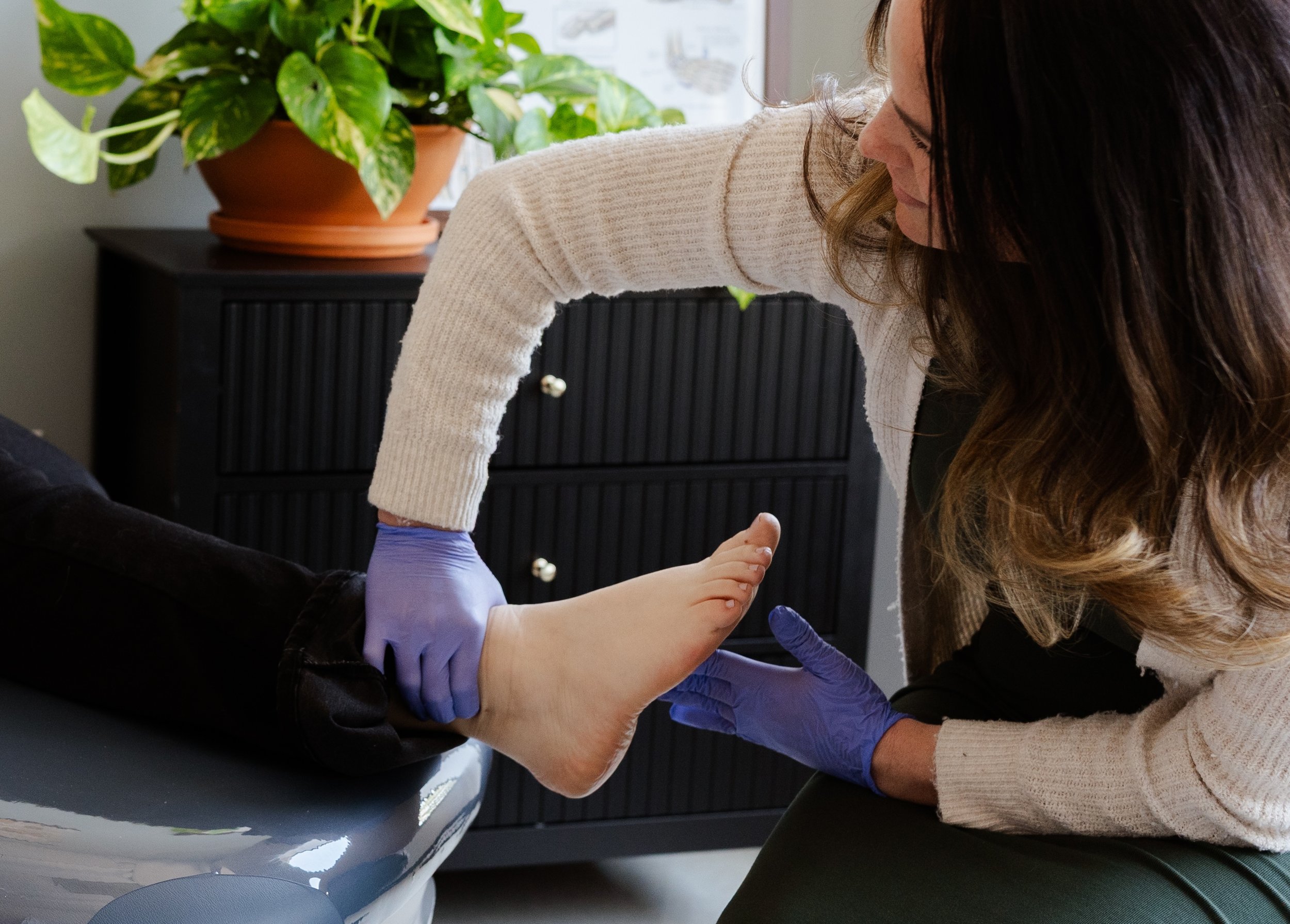
A detailed physical examination
X-rays to rule out bone pathology
Ultrasound to visualize nerve thickening
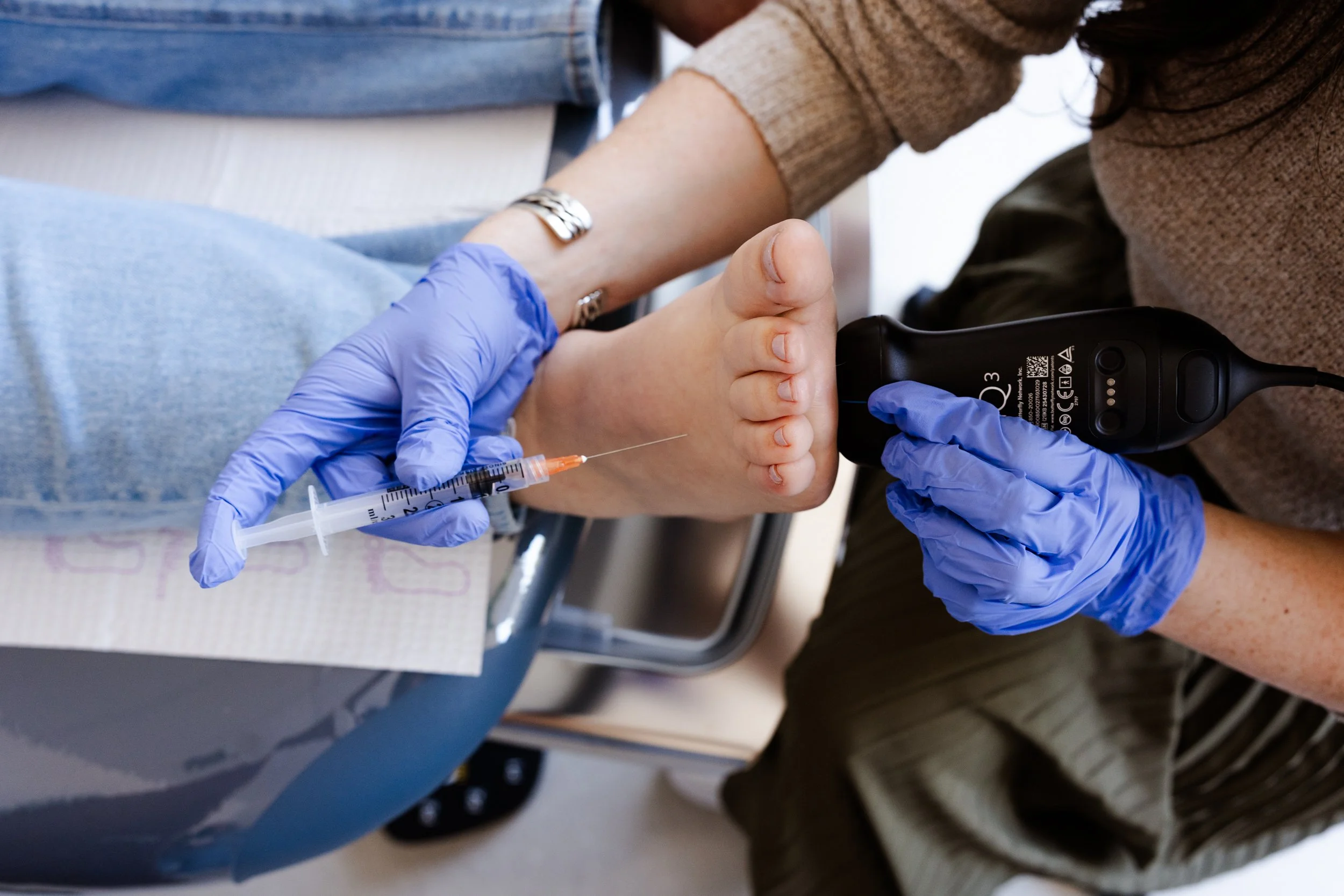
Ultrasound is particularly helpful in confirming the diagnosis and guiding injections when needed. We have this available same day as your appointment!
Proper diagnosis is critical, as forefoot pain can also be caused by capsulitis, stress fractures, or instability!
TREATMENT
Morton’s Neuroma
The goal of treatment is simple:
Decrease inflammation
Reduce mechanical compression
Maintain a lower inflammatory state
Conservative Treatment
Conservative treatment for neuromas include:
Anti-inflammatory medication
Corticosteroid injections
Strapping or taping techniques
When mechanical pressure is reduced, inflammation can settle, and symptoms often improve significantly.
Is Surgery Needed?
If conservative treatment fails and nerve pain persists, surgical intervention may be discussed.
Surgical options include:
Nerve decompression
Neuroma excision (in selected cases)
Surgery is reserved for patients who do not respond to structural and anti-inflammatory treatment.
Don’t Ignore Forefoot Nerve Pain
If you are experiencing:
Sharp shooting pain into your toes
Clicking or popping in the ball of your foot
Persistent pain that isn’t improving
You should be evaluated before the condition becomes chronic! Book an appointment.
“
Dr Stark was wonderful, thoroughly explaining all the options available to me and what option would be the best for my needs. I felt well taken care of and will be happy to recommend them to all my friends and colleagues.
— KAYLAN
Scientific Research
Morton’s neuroma – Current concepts review
Morton’s neuroma is a common cause of forefoot pain. Most cases can initially be managed non surgically. Steroid injections are useful diagnostic and therapeutic non surgical treatment modality. Careful clinical examination, patient selection, pre-operative counselling and surgical technique are the key to success in the management of this condition.
This systematic review and meta-analysis of ~3,000 patients compared steroid injections, neurolysis, and neurectomy for Morton’s neuroma treatment outcomes. It found that pain relief rates were highest with surgery (neurectomy ~74%), followed by neurolysis (~68%) and steroid injections (~43%), though no single approach was universally effective.
Non-surgical treatments for Morton's neuroma: A systematic review
This review evaluated non-surgical treatments for Morton’s neuroma, including corticosteroid injections, alcohol injections, cryoablation, radiofrequency ablation, and shockwave therapy. It concluded that while steroid injections remain the most common first-line treatment, most non-surgical options still lack strong, high-quality evidence and require further research.