Capsulitis
A Progressive Cause of Ball of Foot Pain
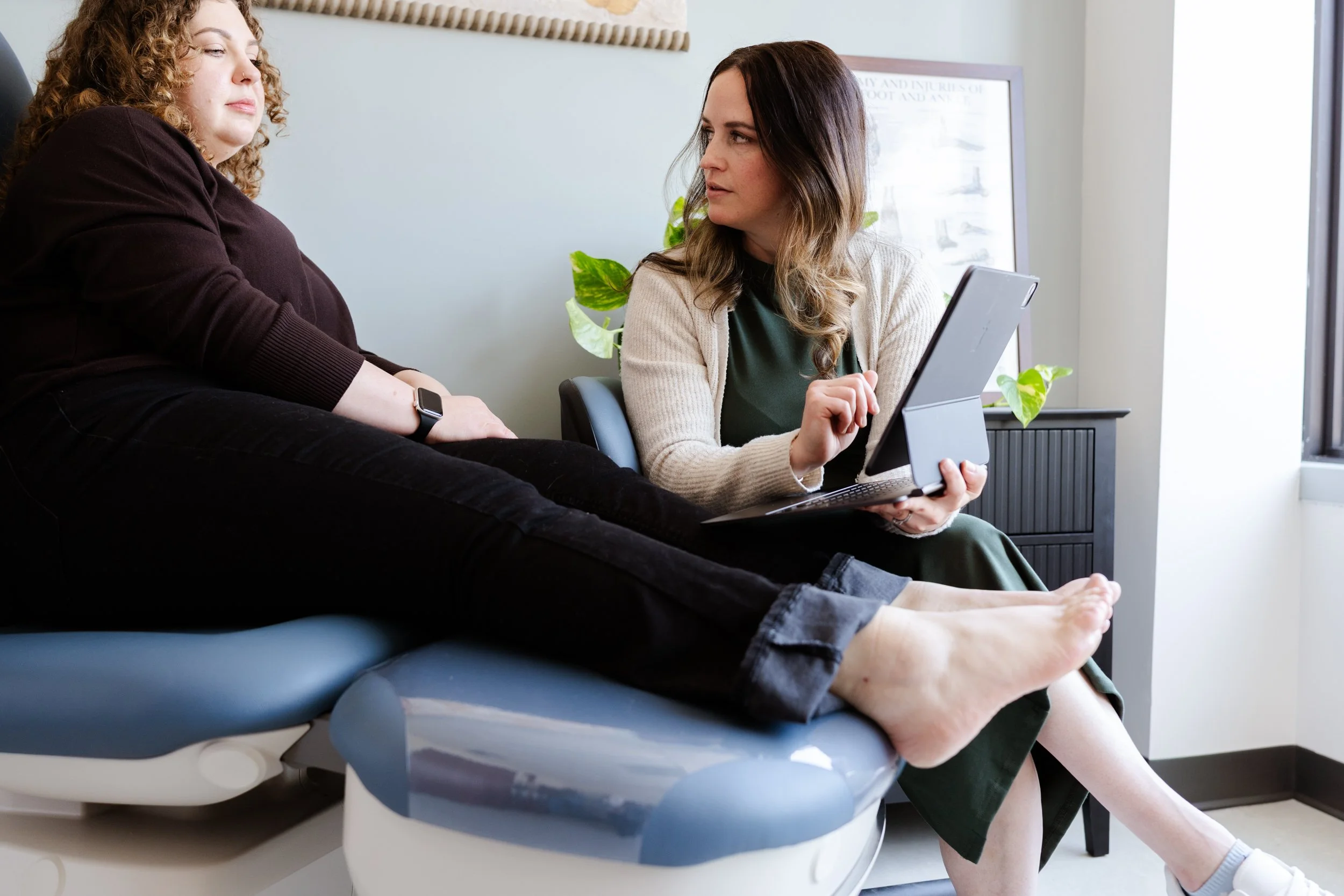
Pain in the ball of the foot is often diagnosed as a nerve problem. However, many patients actually have capsulitis, also known as pre-dislocation syndrome.
Capsulitis is a slowly progressive condition where the ligaments and soft tissues that stabilize the toe joint begin to stretch and weaken. Over time, this leads to joint instability and degeneration. If not treated early, the toe can begin to shift out of alignment.
CAUSES
What Causes Capsulitis?
This condition most commonly affects the second toe joint (second metatarsophalangeal joint).
The structures that normally hold the toe straight, a complex of ligaments, gradually stretch or tear. As instability progresses:
The toe may drift to the left or right
The toe may elevate
The toe may begin to cross over another toe
Degeneration of the joint develops
This deformity does not happen overnight. It is a gradual mechanical failure.
SYMPTOMS
Symptoms of Capsulitis
Early symptoms of capsulitis often include:
Burning or aching pain in the ball of the foot
Pain with walking or push-off
Callus on the bottom of the foot
Swelling near the base of the toe
Feeling like you are “walking on a pebble”
As degeneration progresses, visible toe movement or migration may occur.
DIAGNOSIS
Often Misdiagnosed as Morton’s Neuroma
Capsulitis syndrome is frequently mistaken for Morton’s neuroma. While both cause forefoot pain, they are very different conditions:
Morton’s neuroma is a nerve problem
Capsulitis is a ligament and joint instability problem
Treating ligament instability like a nerve condition can delay proper care and allow deformity to worsen.
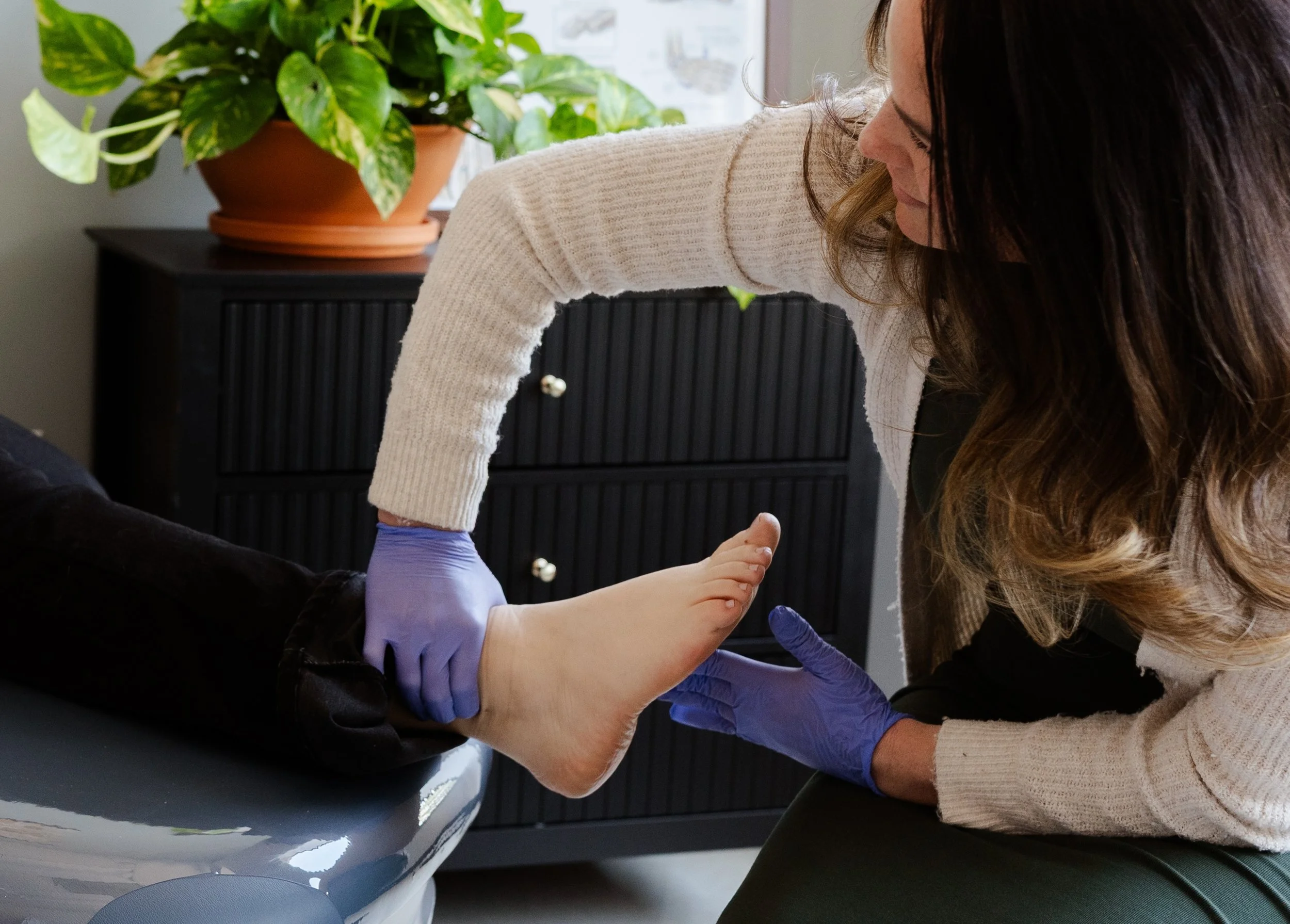
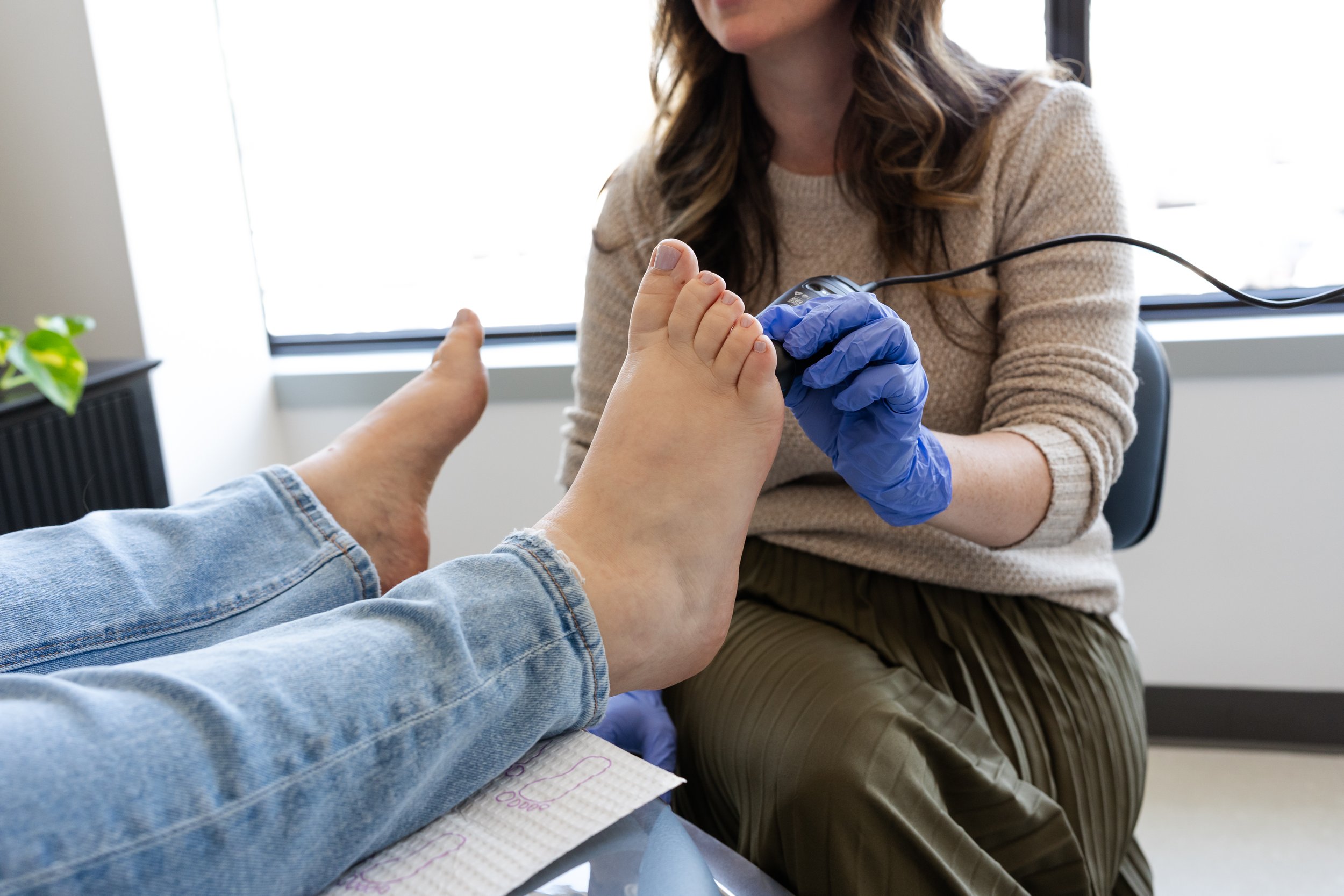
Accurate diagnosis requires a detailed physical exam and proper imaging, including X-rays, ultrasound, and sometimes MRI. We have X-rays and ultrasound available in our office.
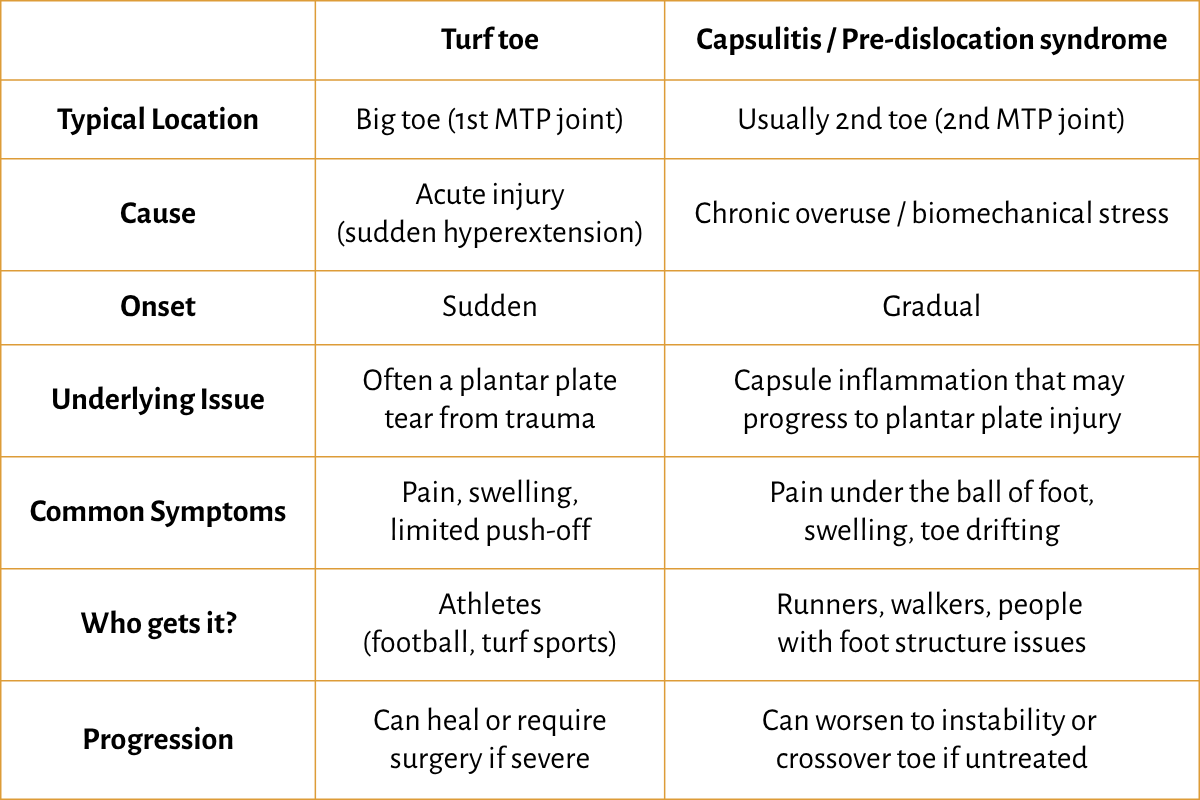
Is it Turf Toe or Capsulitis?
Both Turf Toe and Capsulitis involve the plantar plate and joint stability, so they can often be mistaken for each other. Here’s a helpful breakdown of the differences.
TREATMENT
Capsulitis
Conservative Treatment
When caught early, conservative treatment can be very effective:
Taping or splinting
Activity modification
Targeted steroid injections
The goal is to reduce inflammation and stabilize the joint before permanent deformity occurs. We have orthotics, toe splints, laser, shockwave and ultrasound-guided injections in our office.
Is Surgery Needed?
For Advanced Cases of Capsulitis
If degeneration progresses and conservative care fails, surgery may be necessary.
Surgical treatment focuses on:
Repairing or reconstructing the plantar plate ligament
Realigning the toe
Restoring joint stability
When addressed properly, surgery can recreate the stabilizing structures and prevent further deformity.
Don’t Ignore Ball of Foot Pain
If you’re noticing:
Persistent burning pain under a toe
Toe drifting or crossing
Calluses on the ball of your foot
Pain that is not improving with basic treatment
“
I have recently moved to New Hampshire, so when I found myself in need of a podiatrist, I went to see who took my insurance and then by the reviews. I called the office and from the very second the phone answered, the staff went above and beyond my expectations.
I was escorted to the exam room on time and then I had the pleasure of meeting Dr Cate. She is amazing. Knew what my problem was and corrected it that day. They even told me what the cost would be of everything beforehand, if it wasn’t covered by my insurance so there would be no surprises. THAT is never the case with other doctors I’ve seen in my life. I cannot say enough about how fabulous this practice is. I don’t plan on dropping anything on my foot anytime soon but honestly I hope to see them again in the future.
— LISA
Scientific Research
In patients with instability of the toe joints, the second metatarsophalangeal joint was involved in about 63% of cases, making it the most commonly affected area. Surgical repair of the plantar plate led to significant improvement in pain and function, with patient scores improving from an average of 52 pre-treatment to 92 after surgery. These findings highlight that plantar plate injuries are a major cause of forefoot pain and instability, but can be effectively treated when properly addressed.
In patients with pain under the second toe, a positive “drawer test” was able to detect plantar plate tears about 91.5% of the time, making it a very sensitive screening tool. However, on its own it has low specificity (~22%), meaning not every positive test indicates a severe tear. When combined with X-ray findings showing greater than 15° toe deviation, the likelihood of a high-grade tear increases significantly, with specificity rising to roughly 82–89%.
Metatarsophalangeal joint stability: a systematic review on the plantar plate of the lesser toes
Damage to the plantar plate, the main stabilizing structure under the toe joint, has been shown to significantly reduce joint stability, with studies demonstrating about a 23% decrease in resistance to subluxation, 34% decrease in dorsiflexion stability, and 26% decrease in plantarflexion stability when the structure is compromised.
In the News