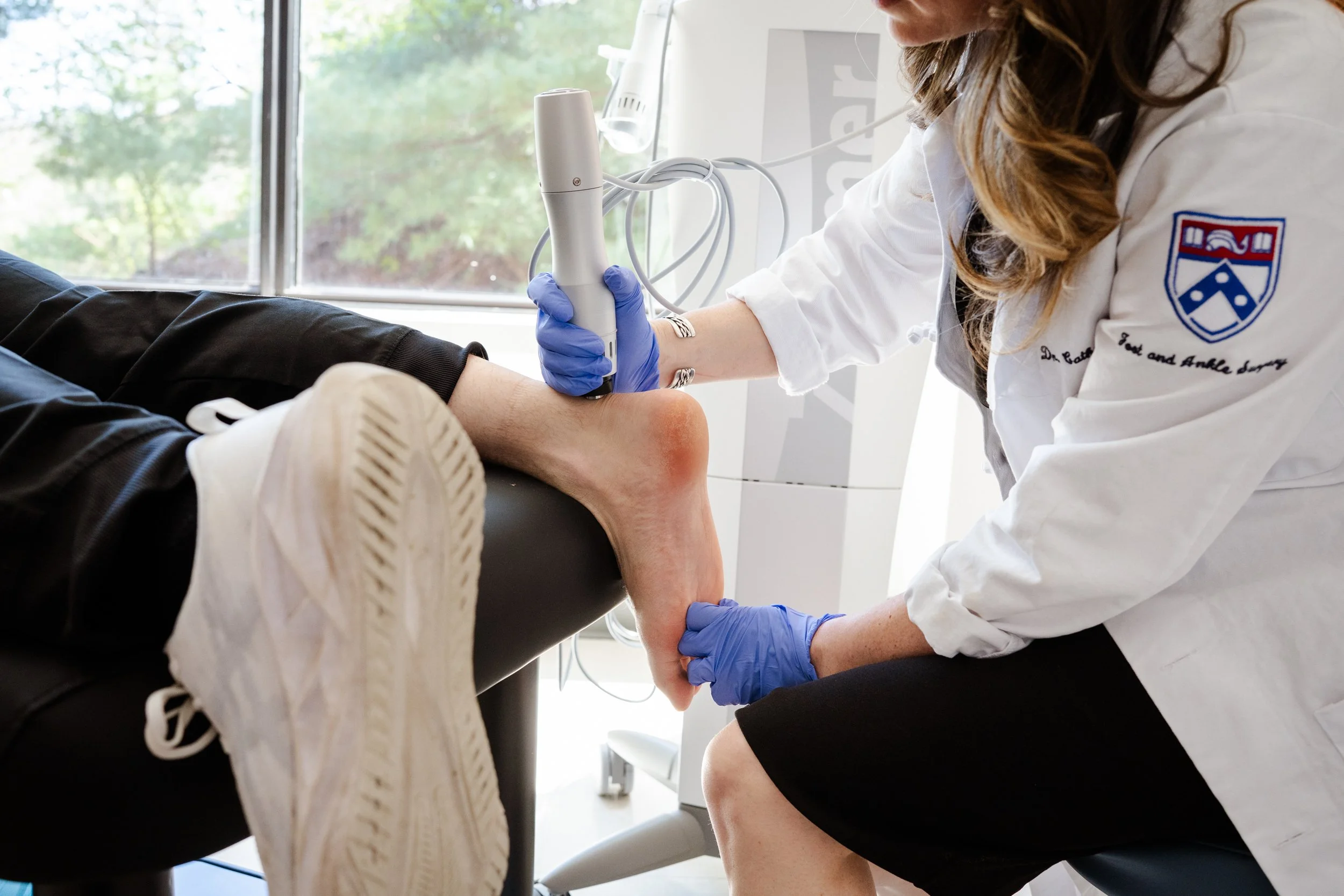
Achilles Tendon
PAIN ON HEEL

Achilles tendon pain is a common cause of heel and ankle discomfort.
The Achilles tendon is one of the longest and strongest tendons in the body. It starts in the calf muscle and runs down to attach to the heel bone (calcaneus). Its main job is to help move the ankle so you can walk, run, and jump.
CAUSES
What Causes Achilles Tendon Heel Pain?
When the Achilles tendon is stretched beyond what it can handle, it can become injured. This is called an Achilles tendon strain. A strain affects a tendon, while a sprain affects a ligament.
If the tendon is stretched even further, it can lead to a partial or complete Achilles tendon tear. This is a serious injury and may require surgical repair, depending on the severity.
If Achilles tendon injuries are left untreated, they can lead to Achilles tendinosis. Tendinosis is a chronic condition where the tendon becomes thickened and weakened over time. A weakened Achilles tendon has a higher risk of tearing.
SYMPTOMS
Symptoms of Achilles Tendon Injury
Common Achilles tendon symptoms include:
Pain in the back of the heel or ankle
Swelling along the Achilles tendon
Pain several inches above the heel bone
Stiffness, especially in the morning or after activity
With an Achilles tendon rupture, many patients report hearing or feeling a pop, followed by severe pain and difficulty or even inability to walk.
DIAGNOSIS
Diagnosing Achilles Tendon Injuries
A podiatrist or foot and ankle specialist may use advanced imaging to diagnose Achilles tendon injuries, including: X-ray, ultrasound, and MRI.
All non-invasive, all not painful!
These tests help determine the severity of the injury and guide proper treatment.
TREATMENT
Achilles Tendon Pain
Achilles tendon treatment depends on how severe the injury is. Treatment options may include:
Rest and activity modification
Bracing or splinting
Physical therapy
Early treatment of Achilles tendon pain can help reduce healing time, prevent long-term damage, and lower the risk of tendon rupture.
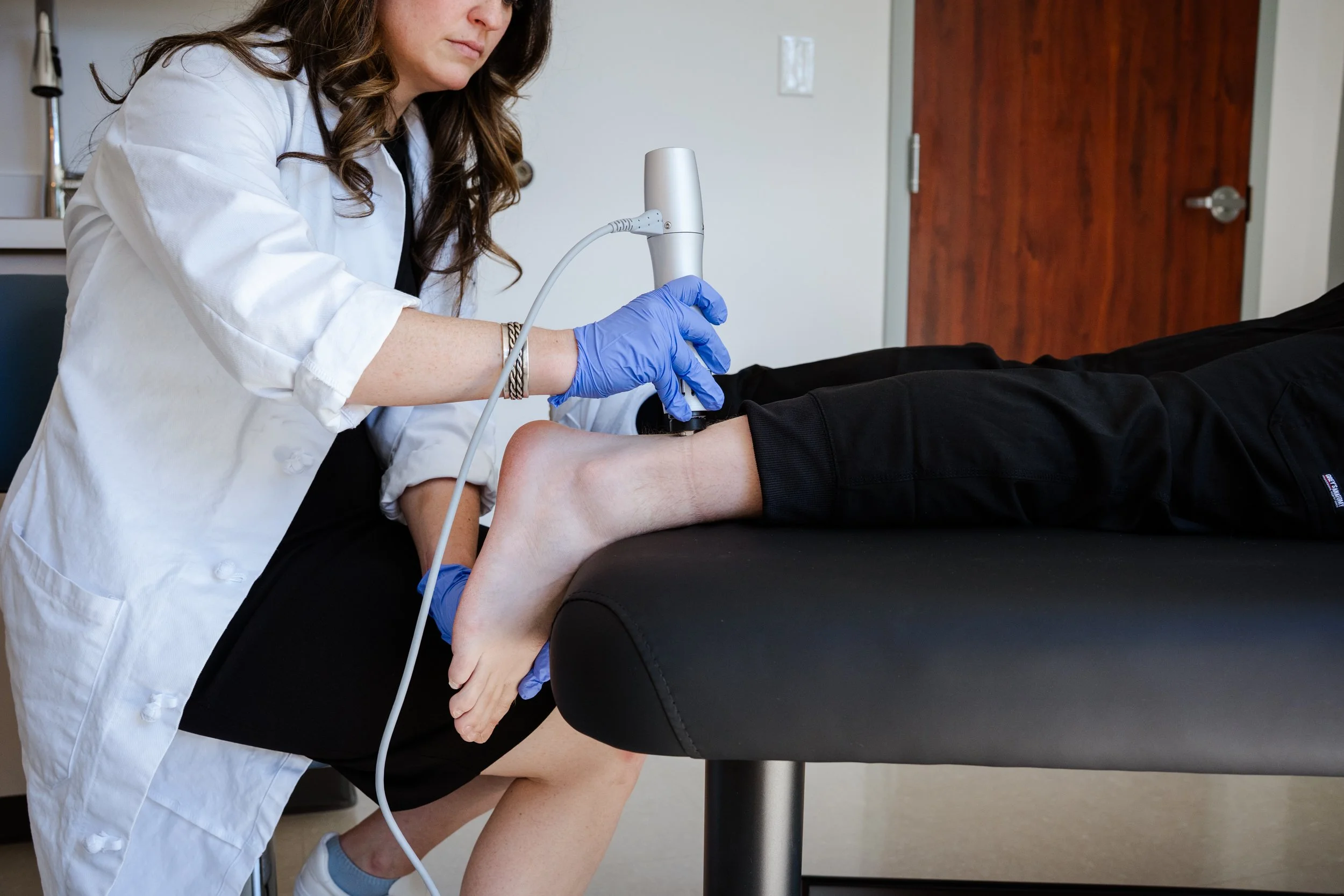
Achilles Tendinosis
Achilles tendinosis is a chronic condition involving degeneration of the Achilles tendon, usually caused by repetitive stress and overuse over time. Unlike acute Achilles tendinitis, which involves inflammation, tendinosis develops when small tendon injuries fail to heal properly. This can lead to tendon thickening, stiffness, pain, and reduced strength in the lower leg and ankle.
CAUSES
What Causes Achilles Tendinosis?
Achilles tendinosis is most commonly caused by repetitive strain on the tendon. Risk factors can include:
Overtraining or sudden increases in activity
Running on hard or uneven surfaces
Tight calf muscles
Poor footwear or inadequate support
Limited ankle mobility
Age-related tendon degeneration
Previous Achilles tendon injuries
Athletes, runners, and active individuals are especially prone to developing chronic Achilles tendon problems.
SYMPTOMS
Common Achilles Tendinosis Symptoms
Common Achilles tendinosis symptoms may include:
Pain or aching in the back of the heel or lower calf
Morning stiffness in the Achilles tendon
Tenderness when touching the tendon
Swelling or thickening along the tendon
Pain that worsens during or after activity
Reduced flexibility or ankle mobility
Difficulty running, jumping, or climbing stairs
Symptoms often develop gradually and may become more persistent if the tendon continues to be overloaded without proper treatment.
DIAGNOSIS
Achilles Tendinosis Treatment
Treatment for Achilles tendinosis focuses on reducing strain on the tendon and stimulating healing. Depending on symptom severity, treatment options may include:
Rest and activity modification
Physical therapy exercises
Eccentric calf strengthening programs
Stretching and mobility work
Ice and anti-inflammatory strategies for pain management
Shockwave therapy or other regenerative treatments
Gradual return-to-sport programs
Early treatment is important to help prevent worsening tendon degeneration or possible tendon rupture.
“
I was so impressed by my time spent here.
The back of my heel has been bothering me for months. The team was so efficient and knowledgeable. Made me feel very comfortable the entire time. Answered all my questions in great detail so I never had to wonder what to expect, I knew.
I would recommend this place 100%.
— BRIT
Scientific Research
Current Concept Review of Achilles Tendinopathy
Achilles tendinopathy is a multifactorial overuse injury characterized by pain and impaired function, requiring individualized diagnosis and a stepwise management approach ranging from conservative therapy to surgical intervention if needed.
Blood Supply of the Achilles Tendon
This study shows that the Achilles tendon has limited blood supply, which may impair healing and contribute to injury and rupture risk.
This randomized controlled trial evaluates whether adding low-energy shock wave therapy to eccentric exercise improves pain and function in patients with chronic insertional Achilles tendinopathy. It suggests that combining shock wave therapy with eccentric exercises could be a promising, lower-risk option to improve pain and function in insertional Achilles tendinopathy without needing surgery.
Treatment of Acute Achilles Tendon Ruptures. A Meta-Analysis of Randomized, Controlled Trials
Open surgical repair of acute Achilles tendon ruptures lowers re-rupture risk compared to nonoperative care but carries higher complication rates, which may be reduced with percutaneous techniques and functional bracing.
In the News