Tendinitis
Tendon Inflammation in the Foot + Ankle
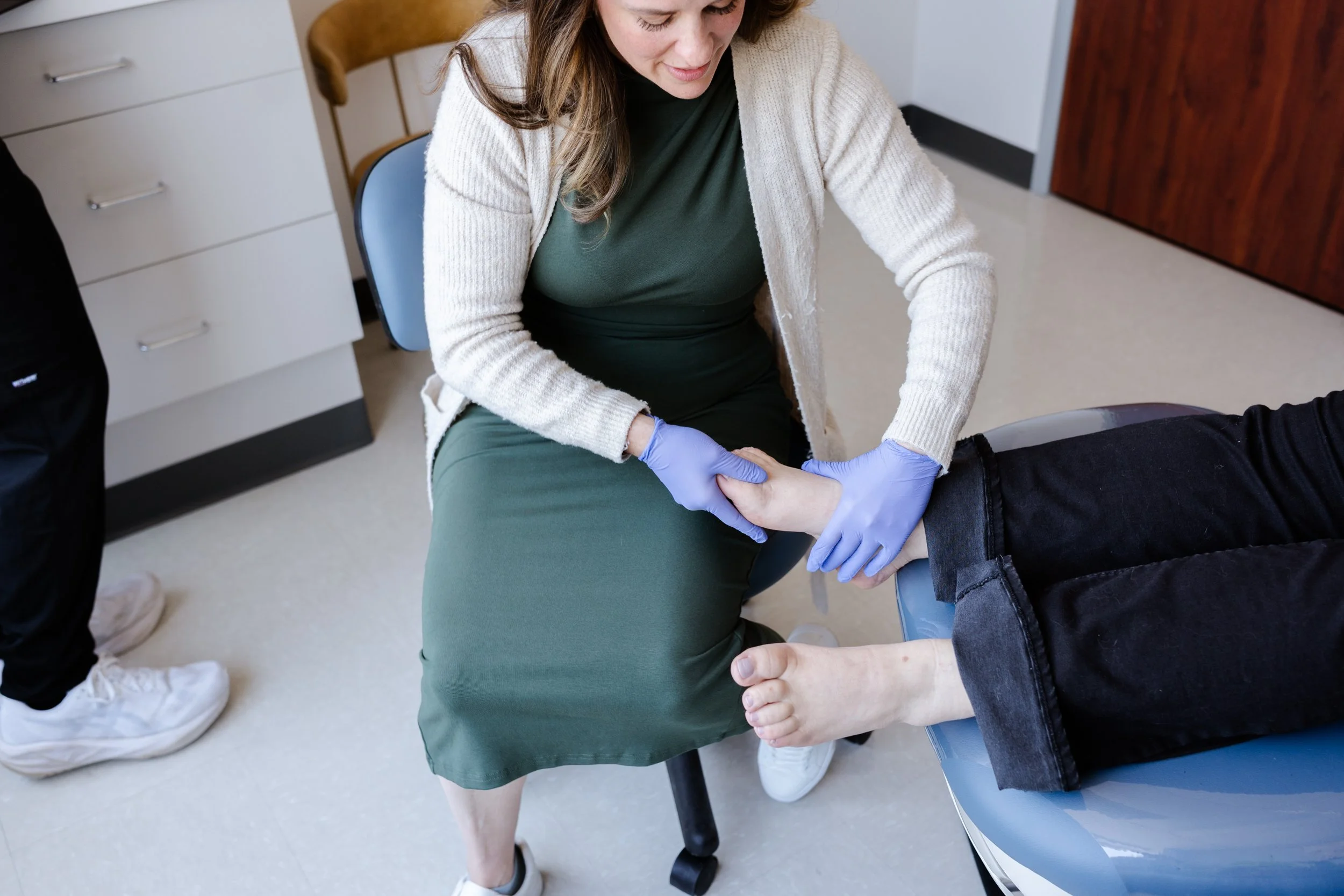
Tendinitis is inflammation of a tendon — the strong, rope-like tissue that connects muscles to bones and allows your joints to move. It can develop in the foot or ankle from overuse, imbalance, or injury.
CAUSES
Understanding Tendinitis
Tendinitis is common in athletes, active children, and adults who put repetitive stress on their feet and ankles. Proper evaluation is important to prevent chronic pain or tendon degeneration.
Tendinitis is an acute condition involving inflammation of the tendon, while tendinosis is a chronic condition caused by long-term tendon degeneration and microscopic damage from repetitive overuse.
Tendinitis can affect different parts of the tendon and is classified into:
Tendinosis – degeneration or thickening of the tendon itself, usually from long-term overuse. This is more chronic and occurs with little inflammation.
Tenosynovitis – inflammation of the sheath that surrounds the tendon, leading to swelling and pain.
Enthesopathy – inflammation at the tendon’s attachment to bone, which can be painful and limit movement.
A helpful analogy: imagine the tendon as a knife and the sheath as the protective cover. The tendon glides smoothly inside the sheath with fluid that reduces friction. When the tendon or sheath becomes irritated, movement becomes painful.
SYMPTOMS
Common Tendinitis Symptoms
Patients with tendinitis may experience:
Pain or tenderness along the tendon
Swelling, warmth, or redness around the tendon or its sheath
Stiffness or difficulty moving the joint
Pain during activity, which often improves with rest
If left untreated, chronic overuse can lead to tendinosis, where the tendon becomes thickened, less flexible, and more prone to injury.
DIAGNOSIS
Diagnosing Tendinitis
Diagnosis for tendinitis usually includes:
A physical examination by a podiatrist to assess tenderness, swelling, and range of motion
Patient history of repetitive activities or injury
Imaging, such as X-ray, ultrasound, and possibly MRI.
Correctly identifying the type of tendon injury, tendinitis, tendinosis, or tenosynovitis, helps guide the most effective treatment plan.
TREATMENT
Tendinitis
Conservative Treatment
Most tendinitis cases improve with non-surgical care, focusing on reducing strain and promoting healing:
Rest and activity modification to protect the tendon
Ice or anti-inflammatory medications to reduce swelling
Stretching and strengthening exercises to balance muscles and support the tendon
Splints, braces, or orthotics to stabilize the joint and reduce friction
Physical therapy to restore tendon strength and joint balance
Corticosteroid injections to reduce inflammation in severe cases
Advanced tendon treatments, such as shockwave or laser therapy
Maintaining balanced strength and proper foot mechanics is essential for preventing recurrence.
Is Surgery Needed?
Surgery is rarely required but may be necessary if:
The tendon or sheath is severely damaged
Conservative treatments do not relieve pain or restore function
Chronic tendon degeneration or rupture occurs
Surgical procedures can repair or reconstruct damaged tendons to restore stability and motion.
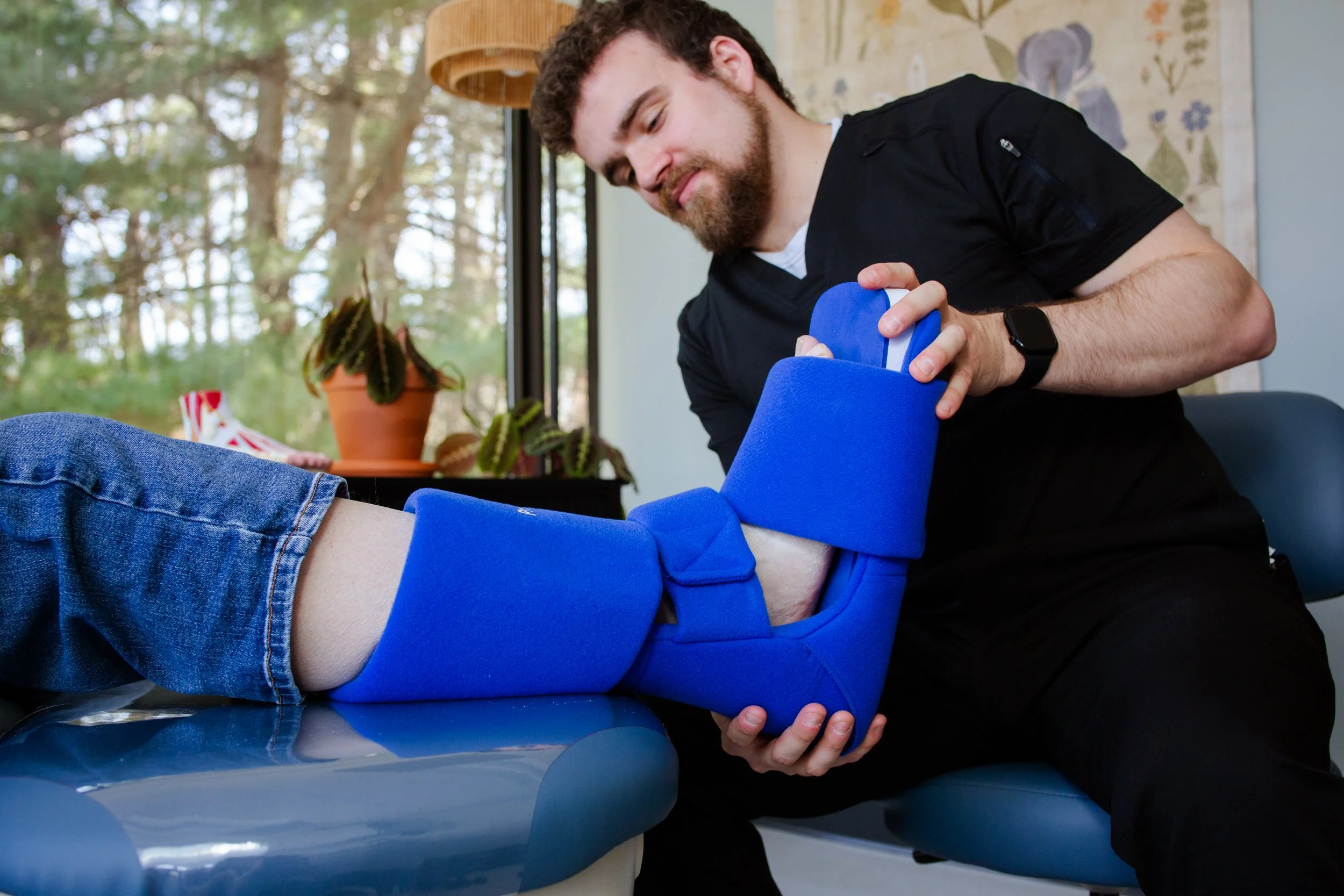
Tendinitis Can Be Managed Effectively
Tendinitis can be painful and limiting, but with early diagnosis and proper care, most patients fully recover.
If you experience foot or ankle pain, swelling, or stiffness that worsens with activity, an evaluation with a podiatrist can determine the cause and guide the best treatment plan.

“
What a wonderful place to go if your feet are having issues! Everyone is so cheerful and kind. I'm disabled and not able to stand for very long, and Ben was able to work with me to get my X-rays done from a seated position. Dr. Stark took the time to explain those X-rays to me in a way that I understood. Then she recommended a non-surgical, noninvasive treatment that was low cost and is working very well so far. No high pressure to get surgery or buy expensive supplements or doodads. Just great people who love their work and treat their patients well.
— ANNE
Scientific Research
Ankle and Foot Overuse Disorders: Tendinopathy and Other Soft Tissue Injuries
Overuse ankle and foot disorders stem from chronic microtrauma to tendons and soft tissues, causing pain, dysfunction, and degeneration, with peroneal tendinopathy frequently involved alongside Achilles and tibialis posterior issues. Risk factors include improper footwear, biomechanical flaws like pes planus or cavus, and comorbidities such as obesity or diabetes that heighten inflammation. Early intervention with proper shoes, orthotics, and activity modification prevents progression to rupture or gait-altering complications.
This review of three RCTs (n=93) found moderate evidence (SMD 0.6-1.2) that eccentric strengthening exercises combined with stretching and orthoses outperform concentric exercises or orthoses alone in reducing PTTD pain and disability. However, high-quality RCTs remain scarce, with poor reporting of exercise parameters like sets/reps limiting reproducibility. Clinically, eccentric loading optimizes tendon adaptation when progressed based on pain-free tolerance, supporting its use in early-stage conservative management.
A 2023 systematic review of 26 studies involving 217 patients demonstrated that autografts (tendon from your own body), such as extensor digitorum longus or plantaris tendons, provided superior extensor strength recovery (OR 5.55) compared to allografts (donor tissue) or tendon transfers for tibialis anterior ruptures. Patients reported high satisfaction rates (93%) with significant AOFAS score improvements and minimal complications (2-5%), though mild residual weakness persisted relative to the uninjured side; acute repairs outperformed chronic cases.