Plantar Warts
A Viral Infection of the Skin on the Foot

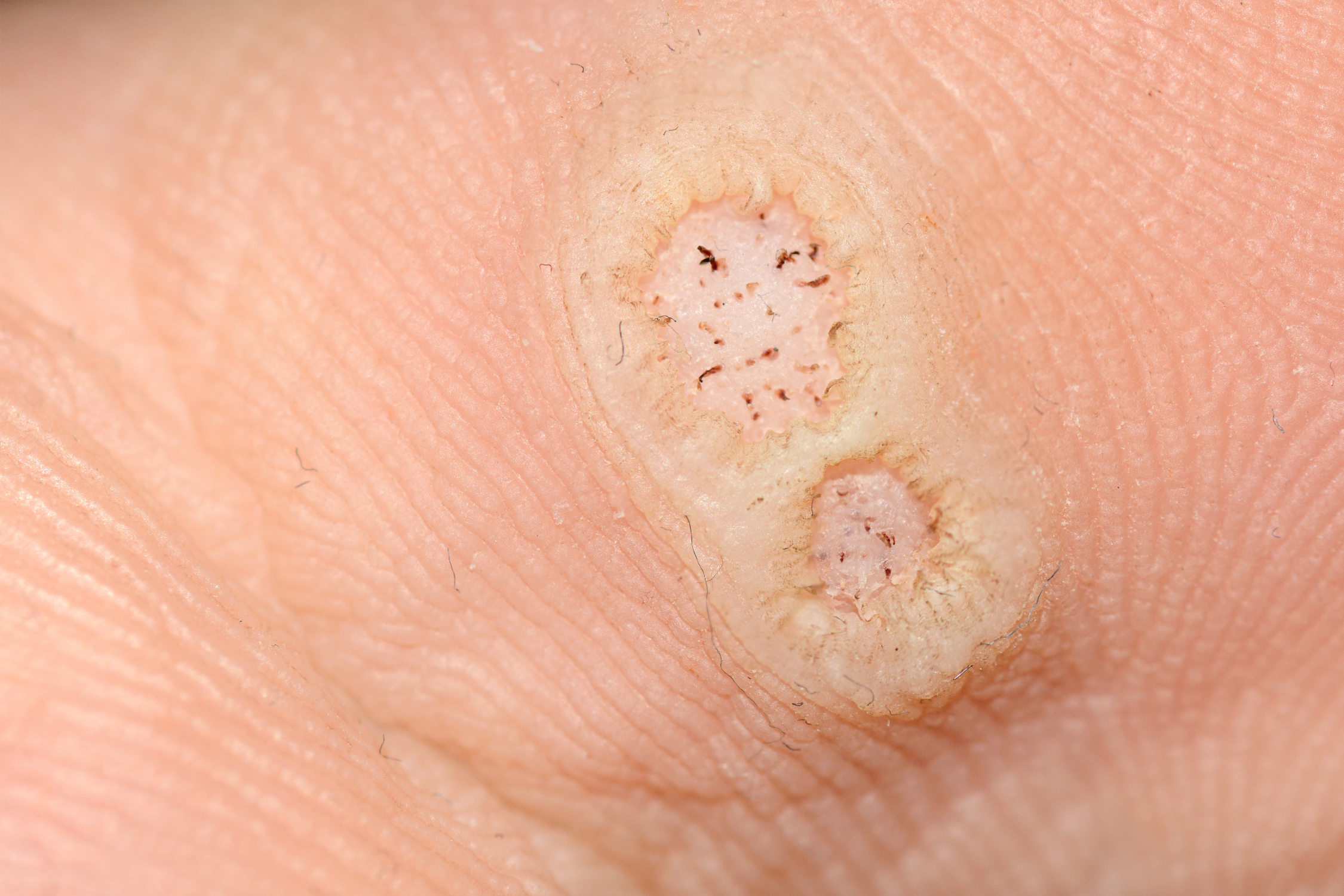
All warts are caused by the viral infection HPV (human papillomavirus), which can invade the outer skin layer resulting in benign growths (warts). Plantar warts are warts that are located on the bottom of the foot.
HPV can be contracted and remain dormant in the body for years, unnoticed by the immune system. The virus commonly enters through tiny breaks or weak areas in the skin, often after walking barefoot in warm, moist environments such as locker rooms, pools, or public showers. Once the virus enters the skin, it can settle into the outer layers and slowly develop into a wart over time.
DIAGNOSIS
Why Warts are Common on the Bottom of the Foot
Plantar warts (plantar ie: located on the bottom of the foot) are often more difficult to treat than warts on other parts of the body because the skin on the bottom of the foot is thicker and under constant pressure.
This pressure can push the wart deeper into the skin, which may cause:
Pain with walking
A rough or callused surface
Small black dots within the wart (tiny blood vessels)
A feeling like stepping on a pebble

TREATMENT
Plantar Warts
There are several effective treatment options for plantar warts. The best treatment depends on factors such as the size of the wart, how long it has been present, and how your body responds to treatment.
Common treatments include:
Topical medications that target the virus
Occlusion therapy via duct tape to stimulate the immune response
Acid treatments to gradually break down infected tissue
Laser treatment
Surgical excision in select cases
Because every wart behaves differently, treatment often requires patience and sometimes a combination of therapies.
A Personalized Treatment Approach
Treating plantar warts is not always a one-size-fits-all process. In our practice, we work closely with patients to determine which treatment approach is most appropriate based on:
The location of the wart
The thickness of the surrounding skin
Pain levels and activity limitations
Response to prior treatments
Our goal is to eliminate the HPV virus that cause warts (strains 1, 2, and 4) while minimizing discomfort and recurrence.
Don’t Ignore Persistent Foot Lesions
Many people mistake plantar warts for calluses or other skin conditions. Proper diagnosis ensures the correct treatment. If you have a painful lesion on the bottom of your foot that is not improving, it should be evaluated by a podiatrist.
We routinely diagnose and treat plantar warts and other skin conditions of the foot. Early treatment can prevent the wart from spreading or becoming more painful.
“
This office is awesome! Everyone you interact with is friendly, warm, and kind. Unlike most doctors I've seen, Dr. Stark comes in the room with great energy. She offered me multiple solutions to my problem and explained each procedure in an easy to understand manner. I never felt rushed in making my decision or like she was trying to hurry out of the room. Not only that, but the treatment is actually working! I couldn't be happier! I don't think anyone enjoys going to the doctor's, but this team makes a usually dreadful experience pleasant!
A+, 5 star, highly recommend.
— BECCA
Scientific Research
Paediatric Cutaneous Warts and Verrucae: An Update
This review highlights that cutaneous warts are extremely common in children, affecting up to around 40% at peak ages, and are caused by infection with specific types of Human papillomavirus (HPV). Most warts resolve spontaneously over time, but plantar warts can be more persistent and harder to treat, with limited advances in effective therapies over recent decades. The paper also emphasizes that transmission is influenced more by close contact and shared environments than factors like swimming pools, and that newer immune-based treatments may offer future promise.
Warts and All: HPV in Primary Immunodeficiencies
This paper explains that while infection with Human papillomavirus (HPV) is extremely common, severe or persistent warts are often a sign of underlying immune dysfunction. It highlights how effective control of HPV depends on cell-mediated immunity (especially T cells and natural killer cells), and shows that specific genetic immune defects can lead to widespread, treatment-resistant wart infections. Overall, it frames warts as not just a skin issue, but a useful indicator of how well the immune system is functioning.
This review explains that plantar warts are common, often painful lesions caused by HPV infection, but remain difficult to treat because no single therapy is consistently effective. It highlights that many treatments—such as salicylic acid, cryotherapy, and laser—have variable success rates and can cause side effects, making management challenging for both patients and clinicians. Overall, the article frames plantar warts as a persistent condition where treatment often requires patience, combination approaches, and sometimes multiple attempts.