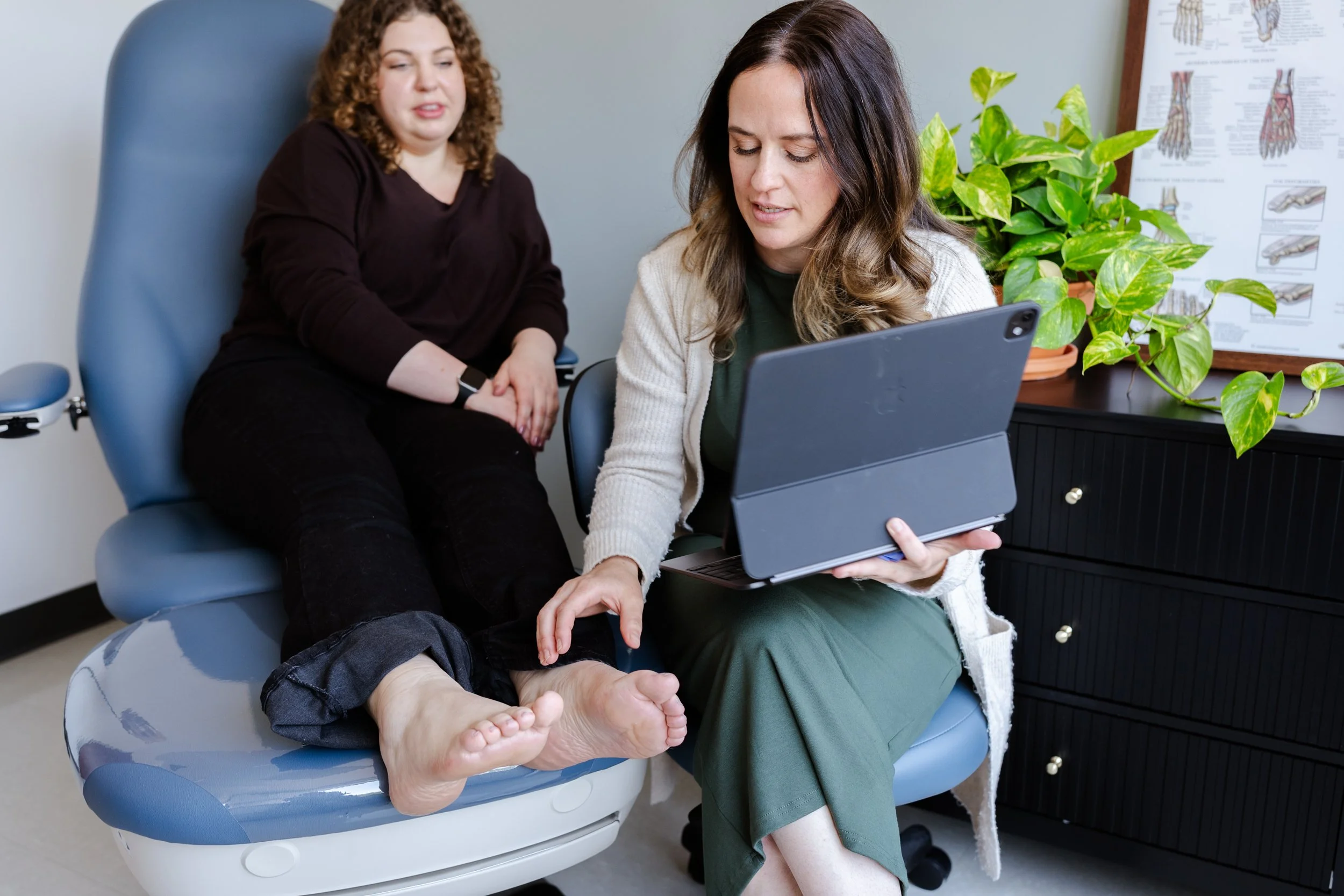
Ingrown Toenails
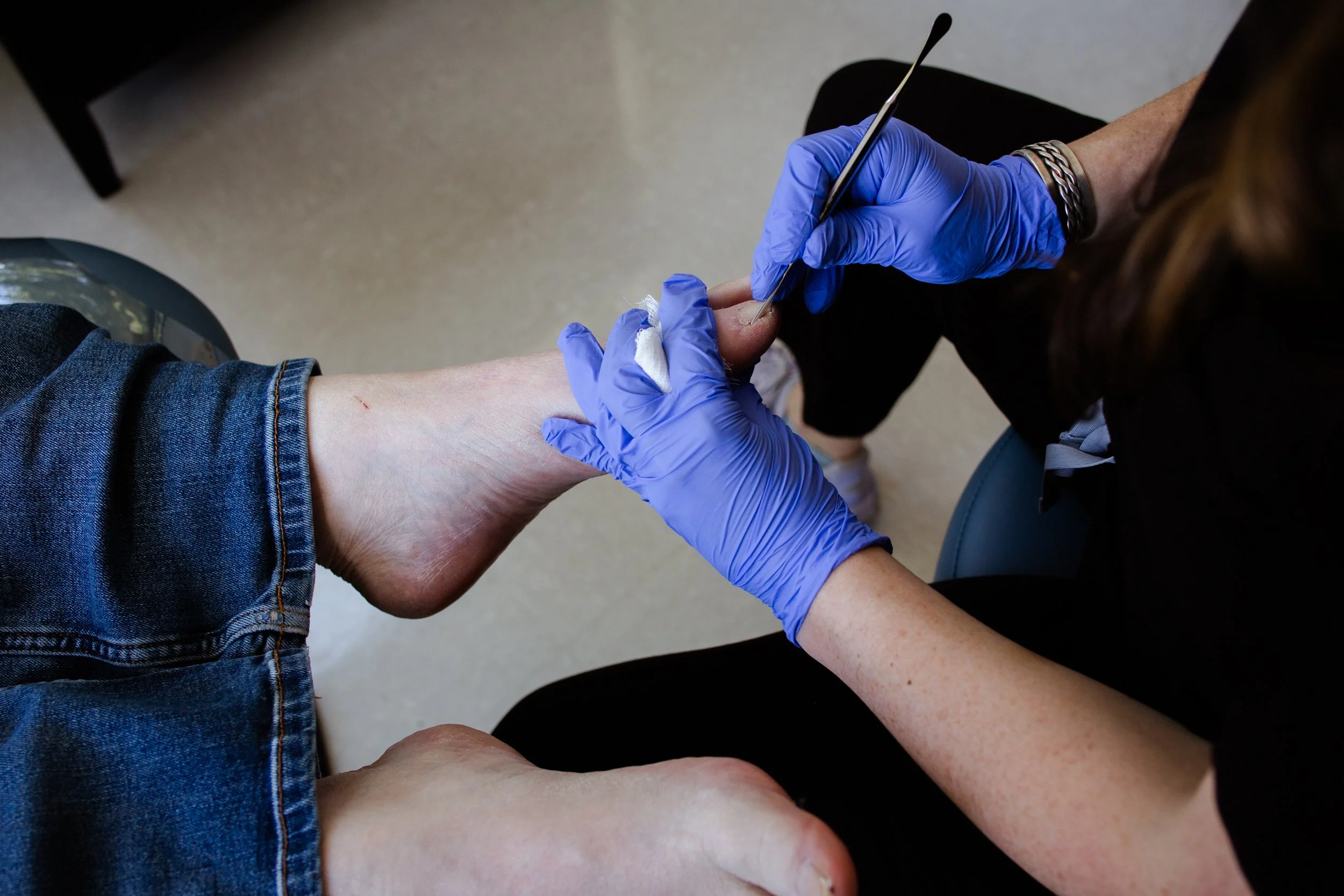
An ingrown toenail occurs when the edge of a toenail grows into the surrounding skin instead of growing straight outward.
This most commonly affects the big toe and can lead to pain, redness, swelling, and infection along the nail border.
CAUSES
What Causes Ingrown Toenails?
Ingrown toenails often develop when the nail edge presses into the skin, causing irritation and inflammation. If bacteria enter the area, the skin can become infected. When treated early, ingrown toenails are usually simple to manage and heal quickly.
Improper nail trimming, especially cutting nails too short or rounding the corners
Tight or narrow footwear that puts pressure on the toes
Toe injuries or trauma
Naturally curved or thick nails
Repetitive pressure from activities such as running or sports
SYMPTOMS
Symptoms of Ingrown Toenails
Early symptoms may begin as mild irritation along the nail border.
Patients commonly notice:
Pain or tenderness along the side of the nail
Redness and swelling around the nail
Warmth or inflammation in the surrounding skin
Drainage or pus if infection develops
As the condition progresses, the skin may grow over the nail edge and the area can become increasingly painful.
DIAGNOSIS
Diagnosing Ingrown Toenails
Diagnosis is usually straightforward and involves a simple physical examination of the toe and nail. During the visit, we’ll evaluate the severity of the ingrown nail, whether infection is present, and the shape and growth pattern of the nail. In most cases, imaging studies are not necessary unless another underlying problem is suspected.
TREATMENT
Ingrown Toenails
Conservative Treatment
Mild cases may improve with conservative treatment aimed at reducing irritation and preventing infection.
Common treatments include:
Warm saltwater soaks to reduce inflammation
Topical antibiotic ointments
Proper nail trimming techniques
Wearing wider, supportive footwear
Early treatment can often prevent the condition from worsening.
Additional Treatment Options
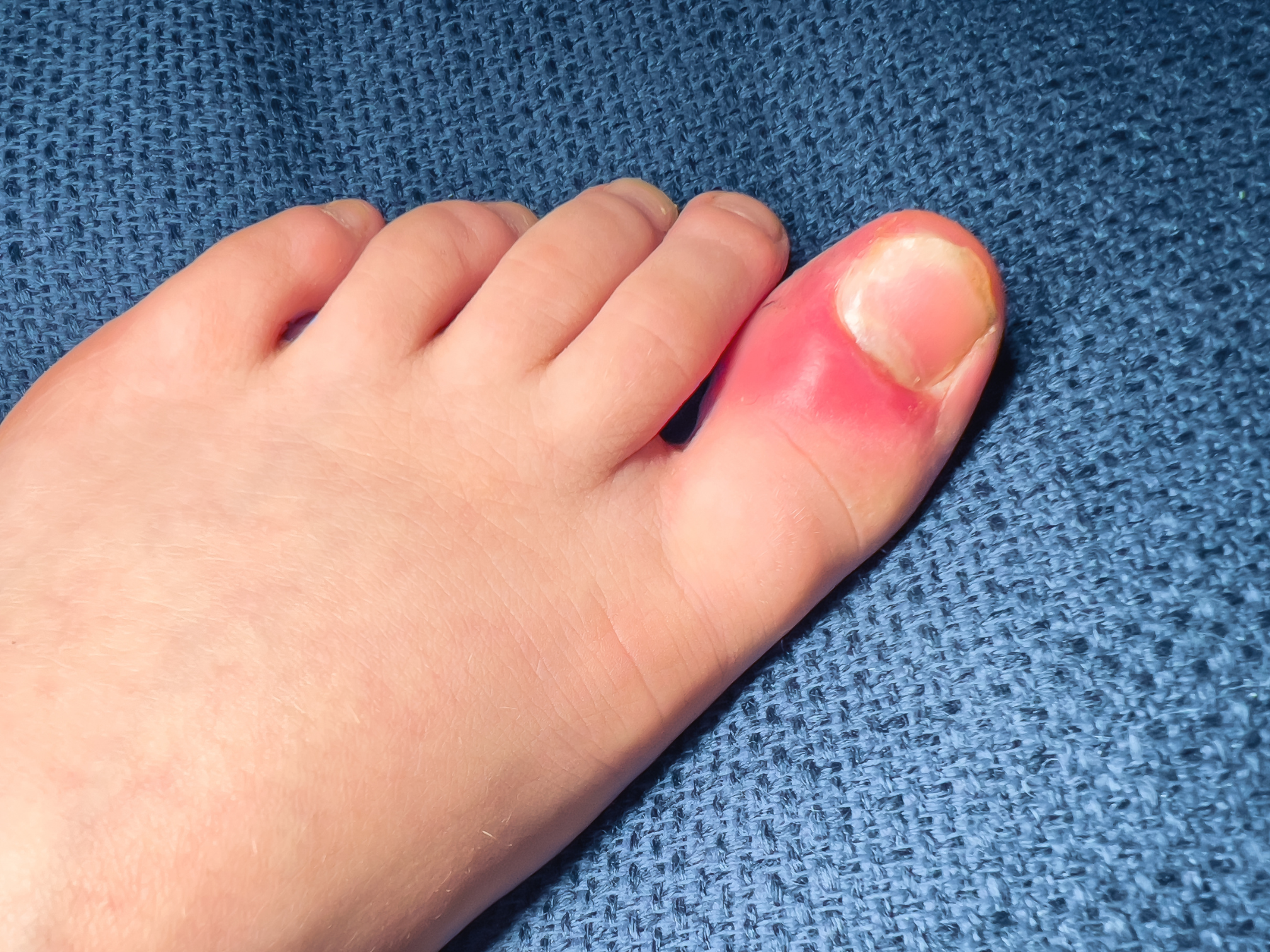
If the ingrown nail continues to cause pain or infection, an in-office procedure may be recommended.
These treatments may include:
Partial nail removal to relieve pressure on the skin
Removal of the affected nail border
A chemical procedure that prevents the ingrown portion from growing back
These procedures are typically quick, minimally invasive, and performed with local anesthesia.
Is Surgery Needed?
For patients who experience recurrent ingrown toenails, a minor surgical procedure may be recommended to permanently correct the nail border.
This procedure helps prevent the problematic edge of the nail from growing back and significantly reduces the chance of recurrence.

Most Ingrown Toenails Can Be Treated Quickly
Ingrown toenails are a common and treatable condition.
When addressed early, most cases improve quickly with simple treatments. Prompt care can relieve pain, prevent infection, and help restore normal nail growth.
If you are experiencing pain, redness, or swelling around a toenail, make an appointment today.
“
I had a very badly infected toenail which was quite painful. I also am a diabetic so it was concerning. Dr. Stark had to remove the nail but was careful that it was done painlessly. She was very easy to talk to and ask questions. I would definitely recommend this practice.
Well. I had another ingrown toenail and was back to see Dr. Stark today. She is so caring and took great care of me. I can’t say enough how her and all the staff are so caring and friendly. Highly recommend.
— LINDA
“
Had a painful and bleeding incident at 7am with my foot. Called and was first told they were fully booked. The receptionist asked the doctor and she said for me to come in. Dr Cate was wonderful and fixed my foot. I would highly recommend them and appreciate everything they did to help me.
— GEORGE
“
Dr. Stark ah-MAZING on my 2 ingrown toenails. I started having this when pregnant 25 years ago & they've continued coming back since then. I had seen horrifying videos online about having them removed & kept avoiding taking care of them all these years. Had I known how painless it was going to be & how nice the nail was going to look after being done, I would have done it long ago. It's beautiful now and not constantly aching anymore. Had I not witnessed her doing the procedure, I would have sworn nothing had been done bc the 'recovery' was nothing - no pain, no oozing, no bother whatsoever, wearing closed toe shoes next day. She goes fast, starts by spraying a cold spray on your toe while injecting the numbing med.... the cold spray is unexpected & you kinda twitch back from it but she keeps calm & keeps injecting the numbing med (you can tell she has lots of experience at this).
There is VERY LITTLE BLOOD, and she doesn't have my toe in a tourniquet - unlike what I saw on the internet before - so don't believe the hype about the horrors of having ingrown toenails fixed AND YOU WILL NOT BE DISFIGURED and left with only half a nail on the toe after she applies the agent that kills the root of the ingrown part so it won't grow back (called Phenol I think). My right foot is all healed up, properly sized nail, only has a tiny bit of old blood that dried under the nail and that will grow out as the nail grows. My advice: DO NOT KEEP PUTTING IT OFF ---GO SEE DR. STARK.
— PAM
Scientific Research
An Outbreak of Mycobacterial Furunculosis Associated with Footbaths at a Nail Salon
This CDC-linked outbreak investigation used epidemiologic tracing of affected patients, clinical case confirmation, and environmental sampling of nail salon footbaths to identify the infection source. It found that rapidly growing mycobacteria in contaminated whirlpool footbaths caused clustered skin infections, with identical bacterial strains present in both patients and salon equipment, confirming the pedicure footbaths as the outbreak source.
Ingrown toenail: How to cut toenails properly
Proper toenail trimming to prevent ingrown nails involves cutting nails straight across without rounding the edges or cutting them too short. The key takeaway is that improper shaping, especially rounding or digging into the corners, creates sharp nail edges that are more likely to grow into the surrounding skin and cause ingrown toenails.