Arthritis of the Foot + Ankle

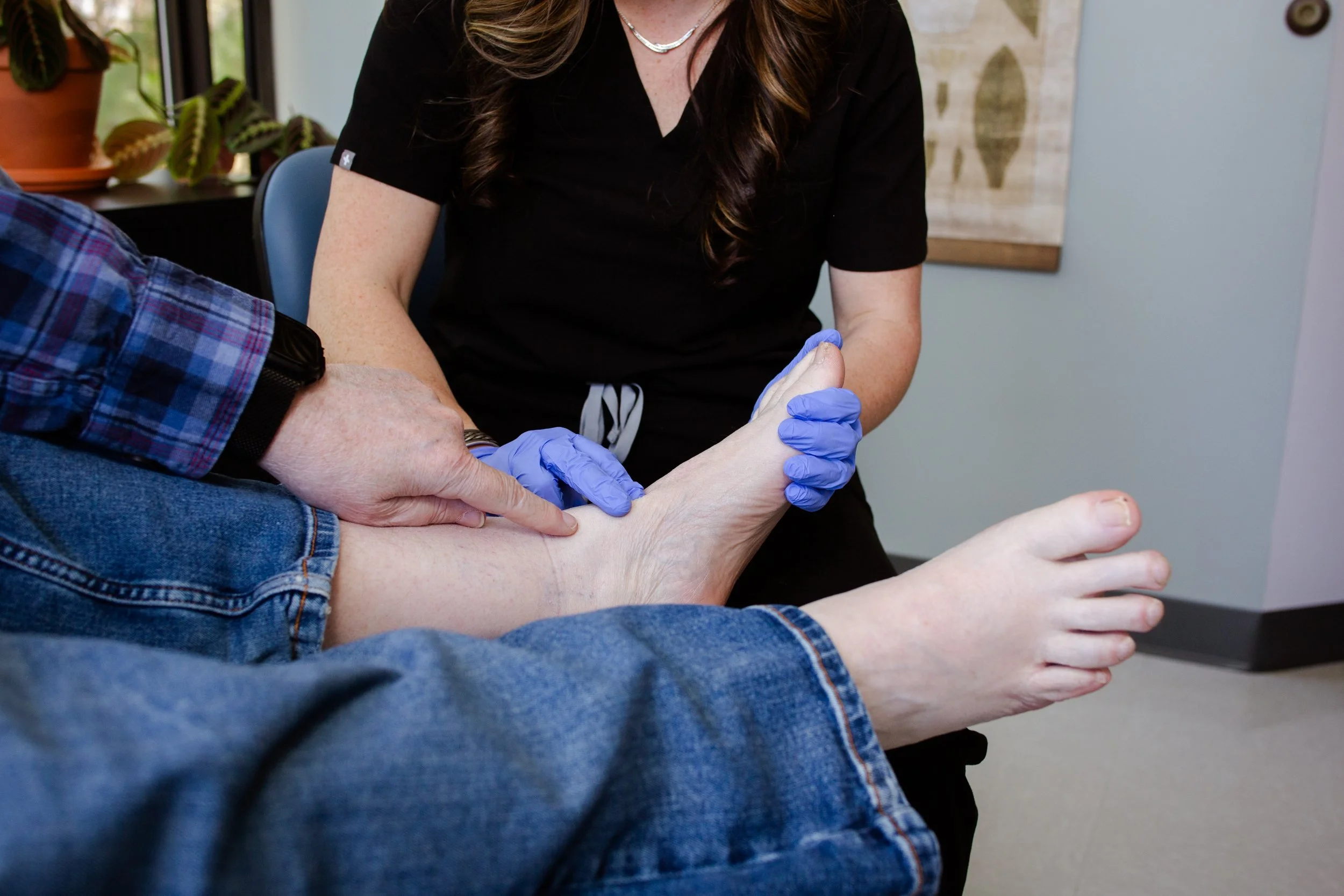
Arthritis is a condition that causes inflammation, stiffness, and pain in the joints. In the foot and ankle, arthritis can affect any joint, including the toes, midfoot, and ankle joint, making walking, standing, or wearing shoes uncomfortable.
Arthritis may develop due to age, wear-and-tear, injury, or autoimmune conditions, and symptoms can range from mild discomfort to severe pain and deformity.
SYMPTOMS
Common Types of Foot + Ankle Arthritis
Osteoarthritis (OA) – the most common type, caused by wear-and-tear of cartilage over time. Commonly affects the big toe (hallux rigidus), ankle, and midfoot.
Rheumatoid Arthritis (RA) – an autoimmune condition where the immune system attacks joint tissue, causing pain, swelling, and deformity.
Post-Traumatic Arthritis – develops after injury or fracture to the foot or ankle, even if the injury healed properly.
Gout – caused by uric acid crystal buildup, which can lead to sudden, intense attacks of joint pain.
Each type of arthritis may affect different joints and requires a slightly different treatment approach.
DIAGNOSIS
Diagnosing Arthritis
Diagnosis usually includes:
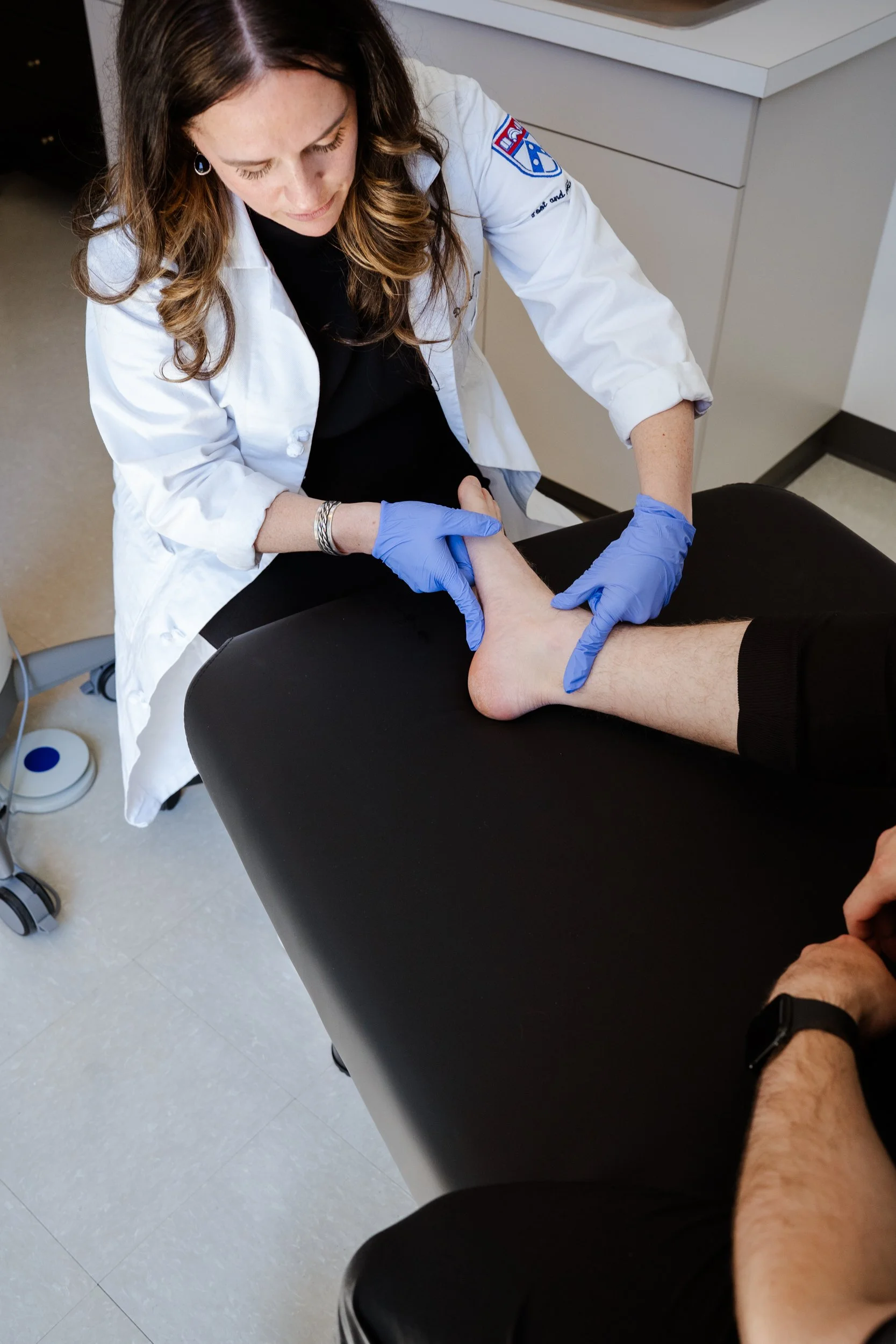
Physical examination to assess joint swelling, tenderness, and movement
X-rays to evaluate cartilage loss, bone spurs, and joint space narrowing
MRI or CT scans for a detailed look at soft tissue and bone
Blood tests in cases of rheumatoid arthritis or gout
A thorough evaluation helps determine which type of arthritis is present and guides treatment.
TREATMENT
How to Treat Arthritis
Treatment focuses on reducing pain, improving function, and slowing joint damage. Options include:
Lifestyle modifications, such as weight management and low-impact exercise
Supportive footwear and custom orthotics to reduce joint stress
Physical therapy to maintain mobility and strengthen surrounding muscles
Medications, including anti-inflammatory drugs, disease-modifying agents (for RA), or uric acid-lowering medications (for gout)
Joint injections with corticosteroids or hyaluronic acid for pain relief
Non-invasive laser therapy
For severe arthritis or joint destruction, surgical options may include:
Joint fusion (arthrodesis) to stabilize painful joints
Joint replacement (arthroplasty) for the ankle or toe
Debridement or bone spur removal to improve mobility and reduce pain
Early Evaluation Improves Outcomes
Arthritis in the foot and ankle can be progressive, but early diagnosis and treatment can:
Relieve pain and inflammation
Preserve joint function
Prevent deformity and chronic disability
If you experience persistent foot or ankle pain, swelling, stiffness, or deformity, an evaluation can determine the cause and develop a treatment plan tailored to your needs.
“
I had the pleasure of seeing Dr. Stark today. She was absolutely amazing.
I’m confident in the very efficient and thorough plan we came up with and I’m already walking out with significantly improved pain. Recommend 10 out of 10!
— VERONICA
Scientific Research
This randomized study compared functional foot orthoses to a sham insert in patients with painful midfoot arthritis and found that both groups improved, but the orthotic group showed greater reductions in pain and improved function over 12 weeks. The study also demonstrated measurable biomechanical changes, suggesting orthotics can alter how forces pass through the midfoot. Overall, the results support orthotics as a helpful non-surgical treatment, though larger trials are needed to confirm effectiveness.
Midfoot arthritis- current concepts review
This review explains that midfoot arthritis is a common but often under-recognized cause of chronic foot pain and functional limitation, most frequently resulting from prior injury or degenerative changes. It emphasizes the importance of identifying underlying causes, including inflammatory or neuropathic conditions, before treatment. Conservative options such as steroid injections can provide both diagnostic and therapeutic benefit, while fusion surgery offers high success rates—around 90%—when carefully planned and performed.
Outcomes following midfoot arthrodesis for primary arthritis
This study evaluated patients undergoing midfoot fusion for arthritis and found high success rates, with about 92% of cases achieving bone union and significant improvements in pain and function. Most patients reported satisfaction after surgery, with functional scores improving substantially postoperatively. While complications and additional procedures did occur in some cases, the results support fusion as an effective treatment for severe, persistent midfoot arthritis.